Friday, 23 December 2022

What Makes HIPL the Best Diaphragm Wall Construction Company in India

With a legacy of over 300 projects, Heritage Infraspace has secured a position among the top diaphragm wall construction companies in India. And as the leading name in diaphragm wall design and construction, it has always upheld the principles of value-added engineering in every project.

Heritage Infraspace Private Limited believes that every strong and durable foundation laid today shapes a more reliable future. With this in mind, it ensures top notch safety and quality deep basement construction that is completed well before the ending period.

Take a look into the key factors that make HIPL the best diaphragm wall construction company in India.

What makes HIPL a notch above the top diaphragm wall construction companies?

The common link between the Central Secretariat, DLF Downtown, Delhi Metro and many other significant projects is their sturdy and durable foundation, made by the top diaphragm construction company in India.

They, hence become the living specimen of HIPL’s construction principles which are as below:

A promise of safety for all

Being among the top construction companies for deep basements, HIPL ensures safety for all at two levels. First is the on-site safety of the qualified engineers, working staff members and supervisors. Each site has qualified safety managers and officers that make sure all safety measures are met and safety regulations are duly followed.

Secondly, HIPL ensures that the safety of upcoming residents and office owners is never compromised by employing advanced machinery and quality materials during the construction of deep basement diaphragm walls.

Every person that visits the site, whether the workers or the client is given safety gear including a helmet, gloves, safety boots and jacket. For those welding the iron mesh, face shields and glasses are provided.

However, what takes HIPL a notch above other diaphragm wall construction companies in India is the daily reminder drill of safety instructions done by every individual present on the site.

Uncompromised Construction Quality

All long-lasting construction marvels have a strong base built with quality materials. Hence Heritage Infraspace follows rigorous standards of quality, from appointing a highly qualified ground team to using the best materials for the construction of the diaphragm walls.

Being among the top construction companies for deep basement diaphragm walls, HIPL stepped in to fill the quality gap in the material used in construction sites across India. Hence it started its very own RMC plant to enable the high reach of assured quality concrete for all types of construction activities.

The materials used on the site go through multiple tests to get the optimised properties. All stages of construction are completed under expert guidance that verifies even the tiniest details from aligning the metal cage to the centre, to using GI (Galvanised Iron) wire for anti-corrosion benefits.

Continue reading What Makes HIPL the Best Diaphragm Wall Construction Company in India

Saturday, 10 December 2022

Why do Deep Basements need Diaphragm Wall Construction?

What is diaphragm wall construction

Residential complexes with multiple apartment buildings and commercial complexes with hundreds of offices and shops are now a part of the landscape of every growing city in India. And these new-age buildings have multistoried basements built deep into the ground for various purposes. These deep basements require diaphragm wall construction to ensure that they have a formidable foundation.

Read on to know about the advantages of concrete diaphragm wall construction for deep basements in all forms of modern buildings.

What is diaphragm wall construction?

What is diaphragm wall construction

Diaphragm walls are reinforced concrete walls constructed for deep basements in the ground. An under-slurry technique involving the excavation of a narrow trench is used for this and walls with thicknesses ranging between 300 mm to 1200 mm can be formed as deep as 45 metres underneath for the next stage of excavation to be conducted.

Advantages of diaphragm wall construction

Build basements of significant depths

A growing population means taller and bigger residential and commercial complexes, which in turn require equivalent parking space. Basement parking lots are an ideal solution to this problem. Earlier, the deep basements would be built up to 3 floors through piling methodology. But with diaphragm wall construction technology, developers are now building basements as deep as 5 levels.

This is because piling would increase the number of joints, might have alignment issues and risk having leakages, but deep basement concrete diaphragm walls serve as a strong foundation as well as protective walls to these basements.

And more space for parking means these commercial and residential properties will be in higher demand compared to the ones with lesser or no parking space.

Construction produces low vibration levels

Another of the great advantages of diaphragm walls is that their construction causes very less vibration to the land and hence minimises the risk of damage to nearby structures. Open excavation involves using heavy machinery like drilling machines, earth movers, etc, which may weaken the foundation of the overall soil on the site and put neighboring buildings at risk of irreparable or hefty damages.

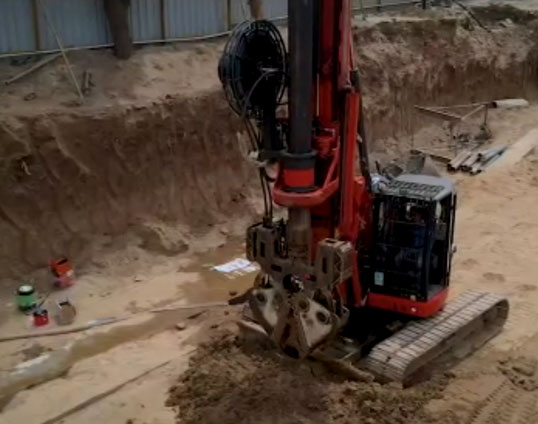
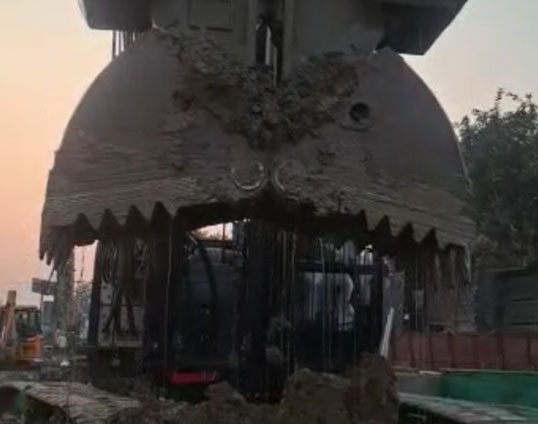
HIPL’s fleet of machines has the best hydraulic rigs manufactured by Casagrande, imported from Italy. This is one of the many things that makes HIPL one of the best diaphragm wall construction companies in India.

Concrete diaphragm walls can act as water barriers too

Concrete diaphragm walls

The water table of the soil in various regions of India varies from moderate to very high. And as the construction gets deeper, the water pressure can increase and cause damage to the basement structure. Concrete diaphragm walls can act as good barriers to water pressure, thanks to the water bars and crystalline compound used in the mix.

Continue Reading Deep Basements need Diaphragm Wall Construction

Wednesday, 23 November 2022

Why Civil Engineers Prefer Ready-Mix Concrete Over Site-Mixed Concrete in D-Wall Construction

Ready-Mix Concrete

Before the foundation comes the right materials, hence most diaphragm wall construction companies pay high attention to the kind of concrete and slurry used in the construction process. With the right quality and quantity of materials, any construction can stand the test of time. One such vital material of the construction world is concrete, constituting refined and coarse aggregates mixed in a fixed quantity and water.

Though, selecting the right type of concrete is highly essential for any project as it can affect its strength, construction cost and time. This is why diaphragm wall contractors in India prefer using Ready-Mix Concrete (RMC) over Site-Mixed Concrete (SMC) for all deep basement underground construction.

RMC Plant

Ready-Mixed Concrete as its name connotes is a tailor-made concrete, manufactured in a plant and delivered to the site in a ready-to-use state. Depending on the specification of the construction project, RMC can be delivered in the plastic state (similar to the concrete dough) in a barrel truck or in the dry state to be mixed on the site itself.

On the other hand, the concrete mix prepared on-site is known as Site-Mixed Concrete. There are various components involved in the preparation of SMC in specific ratios to obtain the desired strength and consistency. Hence it needs to be done under the eye of an expert.

RMC for Diaphragm Wall Construction

RMC for Diaphragm Wall Construction

Talking specifically about diaphragm wall construction, RMC with cement, sand, 10MM and 20MM aggregate, ad mixer, and potable water works most efficiently. The minimum cement content should range around 330 to 400 kg per cubic meter. It is vital to note that for any high water table or underwater project like diaphragm wall construction for dams, the cement content increases by 10%.

The RMC’s retention time is around 2.5 to 3 hours and can be maintained by using admixtures. To reach optimum workability it is advisable to maintain the slump around 170-190m. The top diaphragm wall contractors in India, suggest that the minimum grading should be M25 and M15 for a diaphragm wall and guide wall respectively.

Continue reading

Tuesday, 15 November 2022

Everything Starts With the Soil in Diaphragm Wall Construction

best construction companies in India

Understanding soil is a crucial part of building a diaphragm wall for deep basements. Civil engineers from some of the best construction companies in India will agree that for a project to proceed, it is vital to ensure that the soil on the construction site can take the load, withstand the pressure with time and not degrade the construction material used in the structure.

top civil construction companies in India

As one of the top civil construction companies in India, we have set standards in constructing diaphragm walls in almost all types of soil across the country and worldwide. Read on to know what our civil engineers look for in the ground they work with and the actions they take to ensure a strong foundation is laid for the diaphragm walls to last for the longest time.

Types of soil

A large country like India has different types of soil in different regions as per its climatic conditions and its exposure to various environmental elements like heat, snow, salinity, etc. Being among the leading construction companies in India and having worked all over the country, our engineers have come to define the types of soil below and how they affect deep basement construction:

– Sandy: In the north-western belt of the country, in states like Gujarat, Rajasthan and Haryana, the top soil strata have more sand in them and are drier because of the excessive exposure to heat. While excavating through them is easier, what’s challenging is ensuring the soil doesn’t collapse.

– Marshy: The coastal belt of India that stretches down south from Maharashtra to Andhra Pradesh and West Bengal, has a much marshier soil thanks to the high water table in the ground, proximity to the sea and the humid climate the regions have. The construction of the diaphragm wall in such soil conditions also involves shoring activities.

leading construction companies in India

– Sand with Silt: The central parts of the country, like Madhya Pradesh, Uttar Pradesh, Delhi and some parts of Gujarat have sandy soil, mixed with silt deposits. These occur from the various rivers flowing through these regions. Ahmedabad is one such city.

– Rocky/Gravel: The central and far northern regions of the country with mountain peaks have rocky strata with lots of gravel in their soil. Working in such conditions is a challenge, as engineers have to involve trench cutters to penetrate the layers to excavate further.

Challenges faced by the best construction companies in India

It is never a walk in the park when it comes to constructing a diaphragm wall for deep basements in a country like India, where the soil type changes with every state, cities are densely populated and the soil quality resultantly going down.

Continue reading

HIPL X L&T: A Journey of Pace & Modernity

Built by the top civil construction companies in India , modern superstructures depend on sophisticated and calculated geotechnical solutio...